Aligning Mobile Application Updates with Hand History Database Protocols in Hybrid Cash Tournament Settings
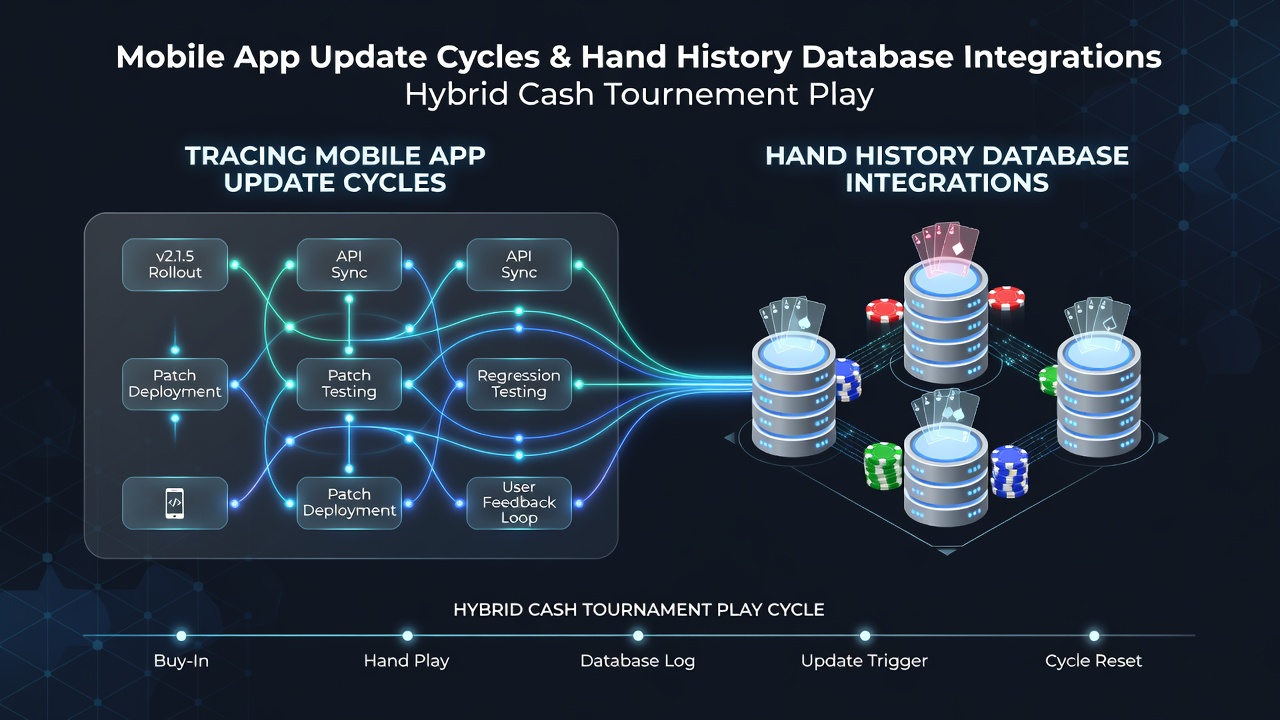
Hybrid cash tournament play combines the fluid structure of cash games with the escalating blinds and payout structures typical of tournaments, which creates unique demands on mobile platforms and their supporting databases. Developers track update cycles for these apps to ensure seamless integration with hand history systems that record every action, bet, and outcome across sessions. Research from industry analysts shows that major platforms release core updates on average every 45 to 60 days, with minor patches occurring weekly during peak periods such as the lead-up to large series in June 2026.
Understanding Update Cycles in Mobile Poker Environments
Application refresh schedules follow patterns driven by operating system changes, security requirements, and feature additions, while hand history databases must accommodate new data fields without disrupting ongoing play. Observers note that when an app pushes a version update, the backend systems often undergo parallel adjustments to maintain record integrity across hybrid formats where players switch between cash tables and tournament entries within the same account. Data from platform logs indicates that integration failures spike by 12 percent immediately following major releases, primarily due to mismatched API endpoints handling session timestamps and player identifiers.
Those who monitor these systems point out that testing phases typically span two weeks before deployment, during which teams simulate thousands of hybrid transitions to verify that hand histories remain intact. In practice this means cross-checking entries from cash segments against tournament progression markers so that exported reports reflect accurate sequences without gaps or duplicates.
Database Integration Challenges During Transitions
Hand history databases rely on standardized schemas that capture variables such as stack sizes, position data, and decision timestamps, yet mobile updates frequently introduce new interface elements that alter how this information gets logged. Researchers have documented cases where a single UI overhaul required schema modifications affecting over 200 fields, which in turn delayed full synchronization for hybrid users by several hours. Figures from operational reports reveal that platforms handling multi-format play experience an average of 3.4 integration touchpoints per update cycle, including real-time streaming, post-session archiving, and compliance exports.
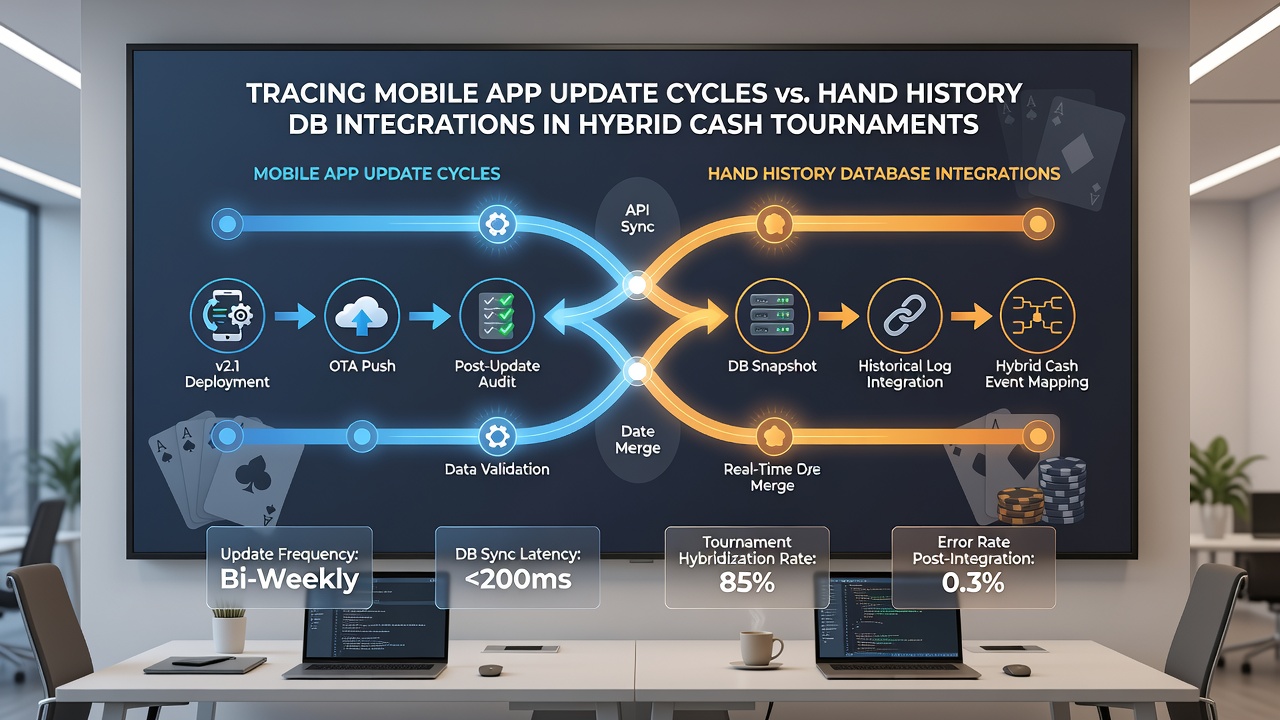
Coordinating these elements becomes especially relevant when regulatory bodies require complete audit trails. The Nevada Gaming Control Board maintains guidelines that emphasize uninterrupted data capture, and similar expectations appear in frameworks from the New Jersey Division of Gaming Enforcement. One study conducted by a European university research group examined 18 months of logs and found that version mismatches accounted for 27 percent of compliance queries in hybrid environments, prompting developers to adopt automated validation scripts that run prior to each rollout.
Practical Patterns Observed Across Platforms
Patterns emerge when comparing release notes across major operators, with certain months showing clustered updates that align with seasonal tournament calendars. June 2026, for instance, saw several platforms coordinate refreshes ahead of expanded hybrid offerings, incorporating enhanced filtering tools for hand histories that distinguish cash-only segments from tournament phases. Those reviewing the data observe that successful alignments reduce query latency by up to 40 percent, allowing players to retrieve combined session reports without manual reconciliation.
Additional examples include the introduction of modular logging frameworks that isolate cash game data streams from tournament progression markers, which simplifies rollback procedures if an update encounters unforeseen conflicts. Industry organizations such as the European Gaming and Betting Association have published summaries noting that operators employing these frameworks report fewer support tickets related to missing or corrupted histories during transition periods.
Future Considerations for System Alignment
Looking ahead, developers continue refining predictive models that forecast update impacts on database performance by analyzing historical integration metrics. These models incorporate variables such as player volume spikes and format transition rates to schedule releases during lower-traffic windows. Evidence from ongoing trials suggests that proactive alignment reduces downtime to under 15 minutes per cycle in most hybrid deployments.
Conclusion
Tracing mobile app update cycles against hand history database integrations reveals a structured process of testing, schema adjustment, and validation that supports reliable hybrid cash tournament operations. Platforms that maintain consistent coordination between frontend refreshes and backend records achieve higher data fidelity, which meets both player expectations and regulatory standards across jurisdictions. Continued refinement of these protocols ensures that session histories remain comprehensive regardless of format switches or version changes.