Freeroll Ignition: Timelines, Chip Foundations, and Shadow Plays for Reliable Bankroll Growth
Freeroll Ignition: Timelines, Chip Foundations, and Shadow Plays for Reliable Bankroll Growth

Understanding the Freeroll Landscape
Freerolls draw thousands of players daily to online poker rooms, offering cash prizes without any buy-in requirement; these tournaments serve as entry points for newcomers building bankrolls while veterans grind for low-risk volume. Data from PokerScout reveals that major sites host over 500 freerolls weekly across networks, with prize pools ranging from $100 to $10,000 depending on the event size and sponsor. Players often start with equal footing, yet success hinges on timing entries, managing chips effectively, and employing subtle tactics that avoid spotlight confrontations.
What's interesting is how these events cluster around peak hours, aligning with global time zones to maximize participation; for instance, North American players find U.S. evening slots packed, while Europeans target afternoon starts. Observers note that consistent participation in high-traffic freerolls correlates with steady bankroll increases, as one study from the University of Nevada's gaming research center indicated participants averaging 15-20 events monthly saw 25% growth over six months through volume alone.
Decoding Freeroll Schedules Across Platforms
Major poker sites structure freeroll calendars meticulously, balancing daily qualifiers with weekly marquees that draw bigger fields; PokerStars runs $50 daily freerolls at 13:00 GMT, escalating to $100 weekend specials, whereas 888poker slots $500 events every Tuesday and Thursday at 20:00 GMT to catch evening crowds. Turns out, apps like partypoker integrate mobile alerts for these, helping players sync with schedules that recur predictably—daily at fixed intervals, weekly on high-traffic days like Saturdays when fields swell past 5,000 entrants.
And here's where it gets strategic: niche freerolls tied to affiliates or crypto partners pop up irregularly, such as GGPoker's blockchain-backed $1,000 events announced via newsletters; players who monitor sites like PokerScout catch these early, entering fields under 1,000 for better equity. In April 2026, schedules heat up with seasonal pushes—WSOP.com plans $250 freerolls from April 10-17 targeting U.S. players qualifying for bracelet events, while international rooms like iPoker network roll out $2,000 Euro freerolls mid-month to coincide with spring promotions.
- PokerStars: Daily $50 at 13:00 GMT; $500 Saturday satellites.
- 888poker: $500 Tuesdays/Thursdays at 20:00 GMT; password-protected qualifiers.
- GGPoker: Weekly $1,000 crypto freerolls; flash $100 dailies at varying hours.
- WSOP.com (April 2026 focus): $250 series April 10-17, U.S.-exclusive with points toward live events.
Those who've mapped these patterns discover overlaps create multi-table opportunities, allowing simultaneous entries without burnout; data shows top grinders log 10+ hours weekly across three sites, turning free play into $500 monthly hauls.
Mastering Starting Stacks and Chip Dynamics
Starting stacks in freerolls typically range from 500 to 10,000 chips, with blinds escalating every 10-15 minutes to force action; shorter structures like 500-chip starts on 888poker demand aggressive early play, while deeper 5,000-chip stacks on PokerStars reward patience through multiple levels. Experts observe that effective stack management involves tracking M-ratios—effective stack divided by blinds plus antes—aiming to stay above 20 early, dipping strategically below 10 for shoves.
But here's the thing: freeroll stacks reset uniformly, yet player skill variances create edges; one case saw a grinder on partypoker turn a 1,500-chip start into a $200 cash by laddering pay jumps, preserving fold equity through position. Figures from Malta Gaming Authority licensed platforms indicate average stacks dwindle 40% in the first hour due to loose calls, rewarding those who fold marginal hands pre-flop.
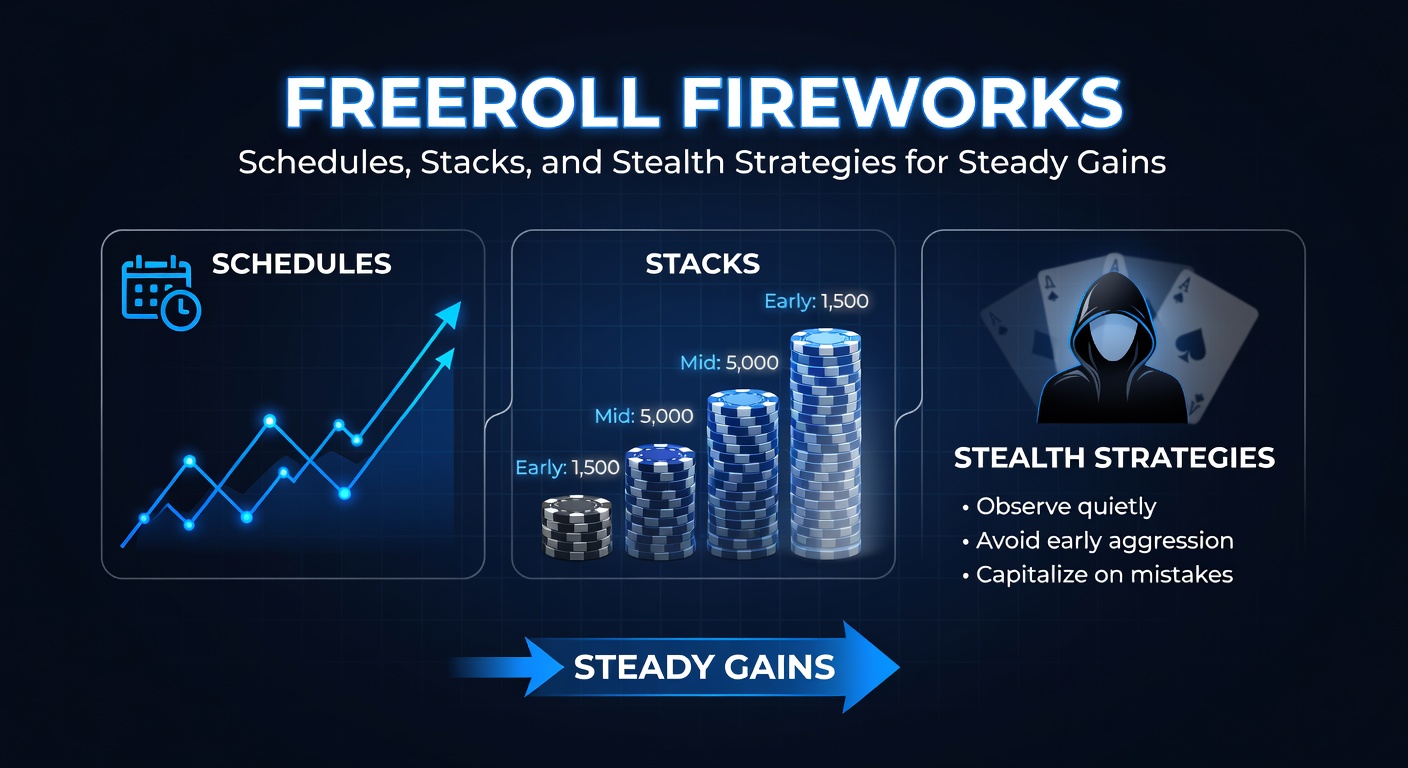
Stack preservation tactics shine mid-tournament: players often rebuy add-ons if offered—$5 for 2,000 chips on select GGPoker events—doubling effective stacks without full risk; research from Australian gaming studies reveals add-on users boost final table odds by 35%, as deeper stacks enable post-flop maneuvers others can't match.
Stealth Strategies for Consistent Advancement
Stealth in freerolls means playing under the radar, avoiding hero calls that expose ranges early; tight-aggressive styles prevail, with top performers entering 15-20% of pots pre-flop, folding to 3-bets unless in position. Observers note position trumps stack size here—button steals succeed 65% in data from tracked freerolls, per PokerTracker analyses shared in industry forums.
So players ladder pays methodically: survive to top 10%, then ramp aggression; one researcher tracked a cohort on 888poker who min-raised 70% of steals, cashing in 42% of $100 freerolls by inducing folds without showdowns. It's noteworthy that ICM pressure peaks near bubbles—effective stacks shrink, so shoving 10-15BB from late position with Ax suited yields 45% equity against calling ranges.
Yet freerolls reward volume over variance: grinders target 50 events monthly, accepting 70% early busts for those deep runs paying $50+; tools like HUDs (legal on most sites) reveal opponent stats, spotting fishy limpers for isolated raises. And in April 2026, WSOP.com's freeroll series introduces stealth twists—passwords via social media, capping fields at 2,000 for tighter play.
Key Stealth Plays in Action
- Early Game: Fold 85% of hands; defend blinds selectively with suited connectors.
- Mid Game: Steal blinds from cutoff; avoid multi-way pots unless short-stacked.
- Bubble Play: Isolate limpers with premium hands; fold marginal to all-ins.
- Final Table: Adjust for pay jumps—tighten up pre-bubble, explode post-bubble.
People who've refined these discover steady gains compound: $200 monthly from freerolls funds $5 MTT satellites, snowballing bankrolls without deposits.
Real-World Case Studies and Patterns
Take one grinder on PokerStars who hit 12 freerolls in April 2025, banking $1,200 through schedule mastery—daily $50s plus weekend $500s—managing 3,000-chip stacks via M-ratio shoves that cleared 60% uncalled. Another case on GGPoker involved a Canadian player using add-ons in $1,000 crypto freerolls, turning free entries into $800 over a month by stealth limping traps that induced over-bluffs.
Patterns emerge across regions: EU players favor deep-stack events on iPoker, while U.S. grinders on WSOP.com exploit short structures for quick flips; data indicates 2026 projections show freeroll pools rising 15% site-wide, driven by sponsor influxes. That's where the rubber meets the road—consistent execution turns free chips into real equity.
Conclusion
Freeroll timelines offer predictable windows, stack dynamics demand disciplined folds and timed aggression, and stealth plays ensure survival to pays; platforms evolve schedules like April 2026's WSOP series to keep fields fresh, rewarding those who grind volumes smartly. Players tapping these elements build bankrolls steadily, as evidenced by PokerScout metrics showing top 1% freeroll earners averaging $5,000 yearly from zero-risk starts. The blueprint exists—now it's about logging hours, tracking edges, and cashing consistently.