Protocol Evolutions in Mobile Poker Apps Reshaping Archival Systems for Poker Histories Worldwide

Core Mechanics of Protocol Changes
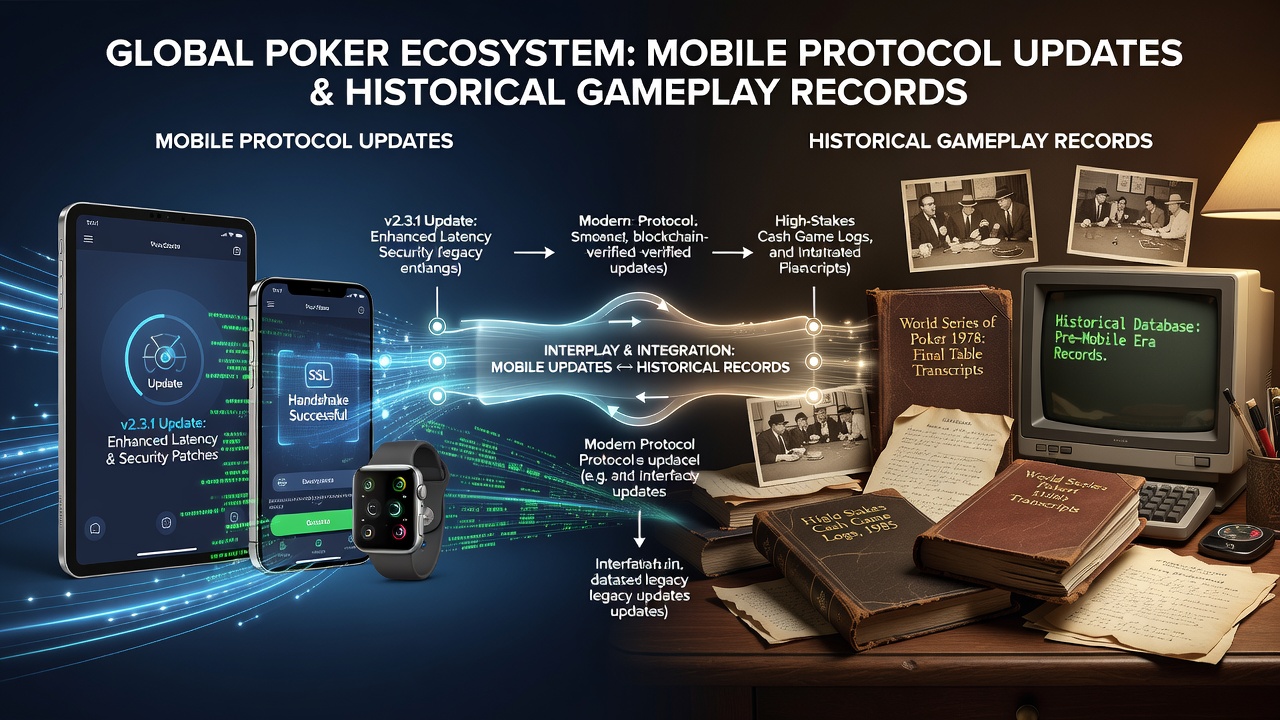
Protocol updates in mobile poker applications involve modifications to data transmission standards, encryption layers, and server communication frameworks that directly influence how historical gameplay records are stored and retrieved across international platforms, and these changes often occur in coordinated release cycles that align with regulatory reporting requirements in multiple jurisdictions. Developers implement new handshake procedures and compression algorithms during these updates, which can alter the format of hand history files, session logs, and player statistic databases while maintaining backward compatibility through migration scripts that convert older records into updated schemas.
Research from the Gambling Research Exchange Ontario indicates that such technical shifts have accelerated since 2024 as operators expand cross-border services, and the resulting data structures require specialized indexing methods to preserve query accuracy for tournament results dating back several years. Observers note that synchronization protocols must handle variable latency in regions with differing mobile infrastructure quality, which affects real-time record uploads during live events.
Impact on Record Integrity Across Regions
Historical gameplay records encompass detailed sequences of bets, folds, and showdowns along with timestamps and player identifiers, yet mobile protocol revisions can introduce discrepancies if checksum validations fail during transfer or if new compression routines discard metadata fields that older systems relied upon. In July 2026 several major platforms rolled out IPv6 enhancements and updated TLS configurations, prompting database administrators to verify that archived tournaments from prior seasons remained accessible without corruption, and this process involved batch testing of millions of entries stored in distributed cloud environments.
Data from the Australian Gambling Research Centre shows that operators in the Asia-Pacific region experienced measurable increases in record retrieval times following similar updates in 2025, while European networks reported fewer interruptions due to more uniform 5G coverage. Those who manage these systems often deploy automated reconciliation tools that compare pre-update and post-update hashes to flag anomalies before they propagate into player-facing applications.
Database Synchronization Techniques
Alignment between mobile entry protocols and draw sequence logging demands precise mapping of new packet structures onto existing relational tables, and developers achieve this through schema evolution scripts that add columns for enhanced metadata such as device fingerprinting and connection quality metrics. Case studies reveal that platforms handling multi-variant circuits must coordinate these changes with seasonal format rotations to avoid interrupting ongoing series, which means testing environments simulate thousands of concurrent sessions to validate that historical queries return identical results before and after deployment.
Experts have observed that shadow databases running in parallel during transition periods allow operators to compare outputs side by side, catching formatting drifts that could otherwise compromise long-term analytics used for compliance audits. The reality is that these techniques scale differently depending on network density, with high-volume markets requiring more robust partitioning strategies to keep latency within acceptable bounds.
Global Network Considerations
International poker ecosystems span regulatory frameworks that impose distinct data retention rules, and protocol updates must accommodate varying requirements for audit trails without fragmenting the unified record system that players expect when accessing accounts from different countries. Researchers discovered through comparative analysis that North American operators tend to prioritize encryption upgrades during protocol refreshes, whereas operators in emerging markets focus first on bandwidth optimization to support regions with intermittent connectivity.
What's interesting is how these regional priorities converge around the need for immutable logs that withstand forensic examination, and industry reports document the use of blockchain-inspired append-only structures in some newer implementations to strengthen verification of older tournament data. People who oversee these global networks coordinate through shared technical working groups that publish compatibility guidelines ahead of major releases, reducing the risk of cross-platform record mismatches during events scheduled for later in 2026.
Conclusion
The interplay between mobile protocol updates and historical gameplay records continues to shape operational practices in digital cardrooms worldwide, with synchronization methods evolving to preserve data fidelity amid expanding technical and regulatory demands. Continued monitoring of these dynamics reveals patterns that inform future development roadmaps across the sector.