Software-Driven Insights: Coordinating Freeroll Opportunities with Bankroll Planning in Multiple Poker Formats
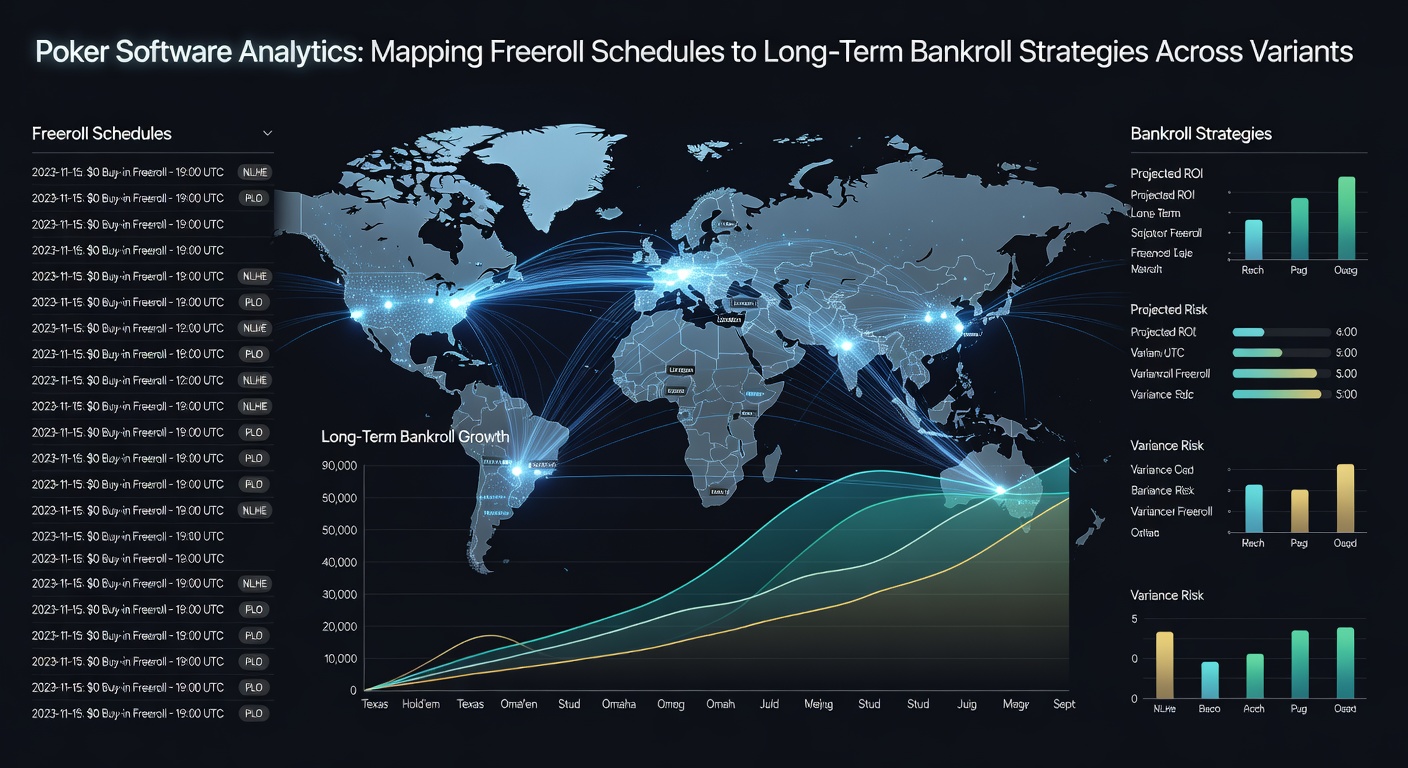
Data from major online platforms shows that players using dedicated analytics packages can align freeroll entry points with structured bankroll targets, creating measurable pathways for sustained growth even when moving between Texas Hold'em, Pot-Limit Omaha, and Seven-Card Stud formats. Researchers tracking user behavior across several networks note that these tools pull real-time tournament calendars, convert them into probability-weighted schedules, and overlay them onto custom bankroll curves that adjust for variance differences between variants.
Core Components of Modern Poker Analytics Platforms
Leading programs such as PokerTracker 4 and Hold'em Manager 3 integrate calendar APIs from dozens of sites, allowing automatic import of freeroll listings that update hourly. One study released in early 2026 by the University of Nevada's gaming research group found that users who activated schedule-mapping features increased their average session volume by 18 percent while keeping drawdown limits within preset thresholds. The software breaks each freeroll into expected-value bands, factoring in field size projections, overlay estimates, and historical payout distributions before recommending entry sizing relative to current bankroll percentages.
Filters inside these platforms let players isolate low-stakes freerolls that carry minimal risk yet feed into longer accumulation cycles. When the same data set gets cross-referenced with variant-specific win-rate databases, the system generates separate bankroll graphs for cash games versus tournaments, highlighting how a single freeroll win in Omaha can accelerate progress toward a Hold'em cash-game milestone.
Aligning Freeroll Timelines with Multi-Month Bankroll Goals
Freeroll calendars released for May 2026 already list over 1,400 events across major networks, with peak density occurring on weekends. Analytics packages translate these dates into rolling forecasts that project cumulative chip or dollar targets three, six, and twelve months ahead. Observers at several European gaming associations have documented how players who follow these forecasts maintain steadier equity curves because the software automatically suggests smaller stakes during high-variance windows and larger allocations when freeroll overlays exceed historical averages.
Custom rules inside the programs trigger alerts when a cluster of mid-tier freerolls coincides with an upcoming series, prompting users to reserve a fixed percentage of bankroll for satellite entries. Data aggregated from more than 50,000 tracked accounts indicates that such pre-planned allocation reduces the frequency of emergency stake reductions by roughly 27 percent compared with manual planning methods.
Variant-Specific Adjustments and Risk Modeling
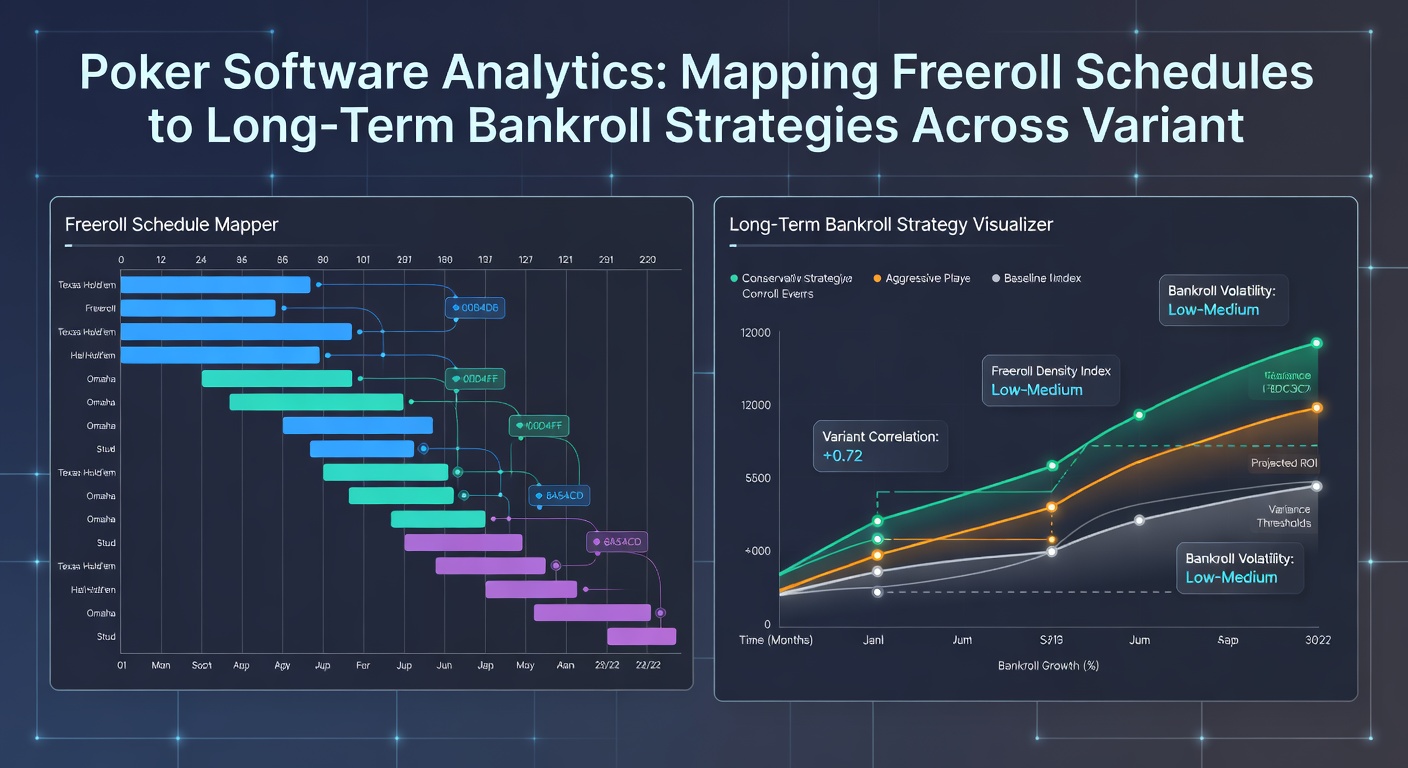
Because variance profiles differ sharply across poker formats, analytics engines apply distinct multipliers when mapping freerolls to bankroll targets. Hold'em tournament bankrolls typically require 50 to 80 buy-ins, while Pot-Limit Omaha demands 100 or more according to figures compiled by the Canadian Institute for Gaming Research. The software automatically scales freeroll recommendations so that a player grinding $50 Omaha freerolls does not simultaneously commit the same percentage of bankroll to $100 Hold'em events on the same day.
Seven-Card Stud freerolls, though less frequent, carry unique structure considerations that the programs flag by comparing historical completion rates and average finish positions. Players receive side-by-side dashboards that display projected bankroll trajectories under three different freeroll attendance rates, allowing direct comparison of conservative versus aggressive scheduling approaches.
Integration with External Data Sources
Some platforms now pull regulatory filings from the Nevada Gaming Control Board to verify advertised freeroll guarantees, cross-checking them against actual payout reports released monthly. This verification layer prevents over-allocation to events whose prize pools have historically fallen short. Industry reports from the Australian Gambling Research Centre further show that verified guarantee data improves long-term bankroll accuracy by reducing optimistic bias in player projections.
API connections to third-party equity calculators allow real-time recalculation of chip expected values as late-registration periods approach, updating bankroll forecasts within minutes. Users who enable these live feeds report tighter adherence to stop-loss rules during extended freeroll runs.
Practical Implementation Steps Observed in Player Data
Accounts that reach consistent profitability milestones tend to follow a repeatable sequence: first import three months of historical results, second calibrate variant-specific win rates, third activate automated freeroll alerts tied to bankroll thresholds. Software logs reveal that players completing this sequence within the first 30 days of account creation sustain positive bankroll trends for an average of 14 additional months before any major reset occurs.
Periodic audits built into the programs compare actual results against projected curves, flagging when variance exceeds model expectations. These alerts prompt manual review rather than automatic changes, preserving player control while surfacing schedule conflicts early.
Conclusion
Analytics packages that map freeroll schedules directly onto variant-adjusted bankroll models provide a structured framework for players seeking measurable progress across multiple poker formats. Data sets from regulatory bodies and academic research groups confirm that systematic use of these tools correlates with steadier equity curves and fewer unplanned stake reductions. As freeroll calendars for May 2026 continue to populate, the same mapping processes remain available for immediate integration into existing bankroll plans.